The carrier force today
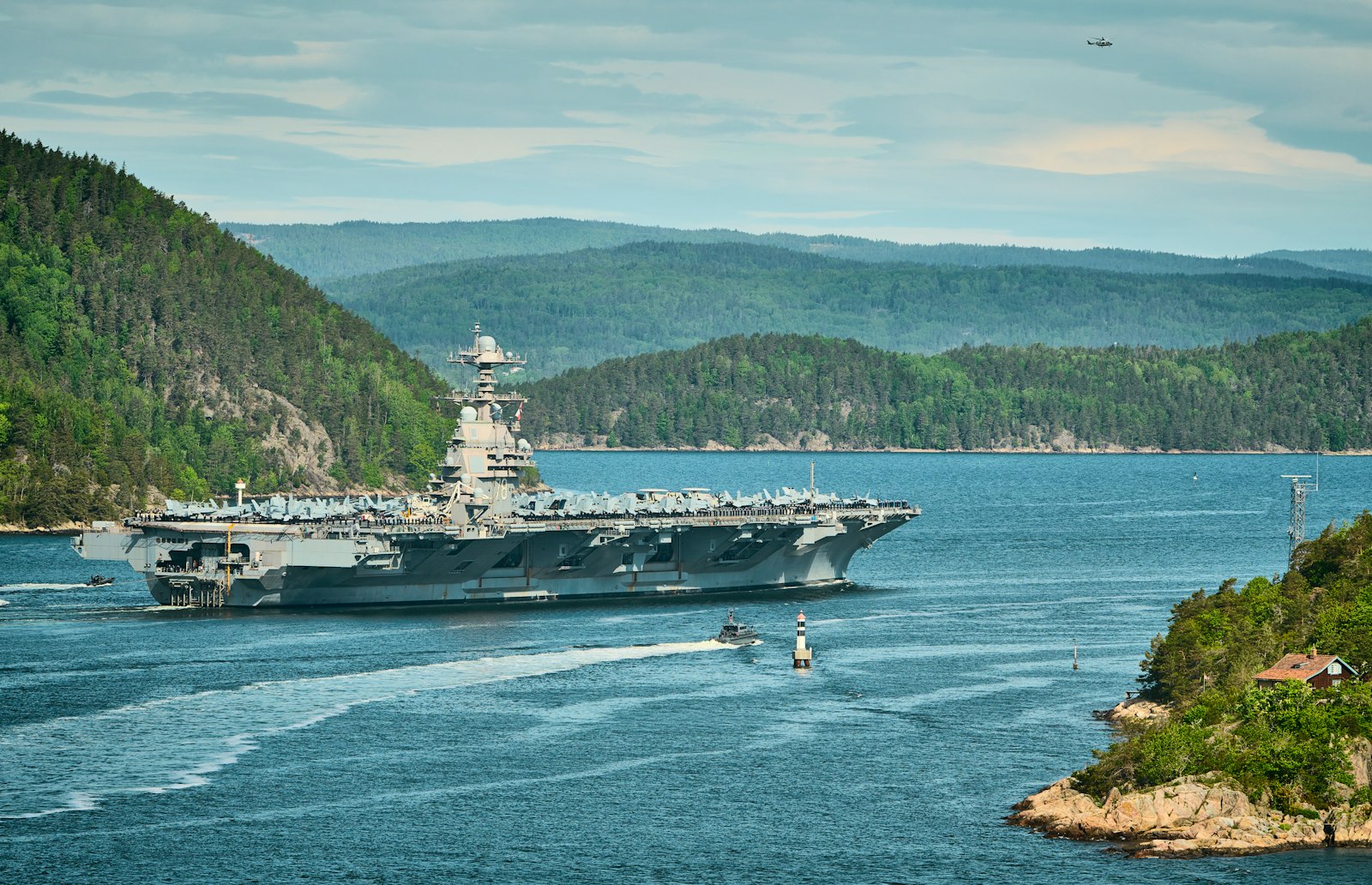
The Navy has 11 aircraft carriers. Ten are Nimitz class ships, hull numbers CVN-68 through CVN-77, which entered service between 1975 and 2009. The eleventh is the USS Gerald R. Ford, CVN-78. Federal law sets a floor of 11 operational carriers, a number Congress put at 12 in early 2006 and cut to 11 later that year.
The fleet has dipped below that line before. After the old Enterprise was inactivated on December 1, 2012, the Navy operated 10 carriers under a congressional waiver until the Ford was commissioned on July 22, 2017. Every one of these ships comes from a single yard: Huntington Ingalls' Newport News Shipbuilding in Virginia, which the Congressional Research Service calls the only U.S. shipyard able to build large nuclear carriers.
The Nimitz class
USS Nimitz was commissioned on May 3, 1975, days after the fall of Saigon. A Federation of American Scientists reference page from 2000 lists the class at 1,092 feet long and about 97,000 tons fully loaded, with two A4W nuclear reactors and four steam catapults. The same page gives a ship's company of 3,200 plus 2,480 in the air wing, and Stars and Stripes reported in 2025 that the lead ship still carried more than 3,200 sailors, with 2,500 or more joining when the air wing came aboard. Displacement varies from ship to ship across a class built over three decades, so treat the tonnage as approximate.
Each Nimitz carrier was designed for a 50-year life with one refueling and complex overhaul around the middle of it, a multi-year job that Huntington Ingalls has finished on Nimitz and five of her sisters. For how these ships fit into a strike group, see our guide to cruiser and carrier groups.
What the Ford changed
The Ford uses "the basic Nimitz-class hull form," CRS notes, but Huntington Ingalls calls it the first new carrier design since Nimitz. The changes are mostly inside and on deck. The Government Accountability Office counted 13 new critical technologies, among them:
- The Electromagnetic Aircraft Launch System, or EMALS, which replaces the steam catapult with "an electrically generated, moving magnetic field."
- The Advanced Arresting Gear, a new system for catching landing aircraft.
- Advanced Weapons Elevators that move bombs and missiles with electromagnetic fields instead of cables.
- A dual band radar and a smaller island set farther aft, with fewer rotating radars and a bigger flight deck.
Behind all of it is electricity. GAO put the Ford's generating capacity at 2.8 times that of the previous class; the builder says "more than twice." The Navy set goals of about 25 percent more sorties per day than a Nimitz and 500 to 900 fewer billets, and estimated the changes would cut each ship's 50-year operating and support costs by about $4 billion.
| Feature | Nimitz class | Ford class |
|---|---|---|
| Ships | 10, CVN-68 to CVN-77 | 1 in service, at least 6 planned |
| In service | 1975 to 2009 | Ford commissioned July 22, 2017 |
| Launch system | Steam catapults | EMALS electromagnetic catapults |
| Weapons elevators | Cable driven | Electromagnetic |
| Electrical generating capacity | Baseline | 2.8 times, per GAO |
| Sortie rate goal | Baseline | About 25 percent higher |
| Crew goal | Baseline | 500 to 900 fewer billets |
| Design life | 50 years | 50 years |
Next guide: the F-35 explained
The carrier-capable F-35C and how it differs from its two siblings.
What the Ford class costs
The lead ship was expensive. The Navy's fiscal 2008 budget estimated CVN-78 at about $10.5 billion; its final procurement cost came to $13.3 billion in then-year dollars, according to CRS. The follow-on ships, with delivery dates from the Navy's fiscal 2026 budget:
- CVN-79 John F. Kennedy: about $13.2 billion, due March 2027, 54 months late. The Navy cites finishing arresting gear certification and elevator work.
- CVN-80 Enterprise: about $14.2 billion, due July 2030. GAO's 2025 assessment said May 2030.
- CVN-81 Doris Miller: about $15.2 billion, due February 2032. It and Enterprise were bought as a two-ship block, which the Navy estimated saved about $2.9 billion.
- CVN-82 William J. Clinton and CVN-83 George W. Bush: named in January 2025, with deliveries projected for 2040 and 2043 and no cost estimate yet.
Congress is also watching faulty welds found on new carriers and submarines at Newport News, first reported in late September 2024.
Growing pains
The elevators were the worst of it. The Ford has 11 of them. Problems surfaced in November 2018, and for much of 2019 the Navy could report only two as certified. The eleventh wasn't certified until December 22, 2021. The ship reached initial operational capability that month and didn't make its first deployment until October 2022, more than five years after commissioning.
The launch and recovery gear has a mixed record. In early testing EMALS suffered 10 critical failures in its first 747 shipboard launches, and the arresting gear had 10 operational mission failures in its first 747 landing attempts. The Pentagon's testing office reported after the 2023 to 2024 deployment that EMALS reliability "has not appreciably changed from prior years," and that a fourth arresting gear engine designed into the ship had been left out to save money. It also found the ship would be 159 beds short with the crew and all units aboard at full strength. In 2022 it judged the Ford "unlikely" to meet its sortie rate requirement, though on deployment its rates met what combatant commanders asked for.
The debate reached the White House. In October 2025 President Trump said he would order steam catapults and hydraulic elevators on future carriers: "When we build aircraft carriers, it's steam for the catapults and it's hydraulic for the elevators."
Get the briefing
Ships, aircraft and the programs behind them, emailed whenever we finish a piece.
The Ford at sea
The Ford's first full-length deployment began May 2, 2023. After Hamas attacked Israel on October 7 that year, the ship moved to the eastern Mediterranean and stayed 76 days past its planned return, getting home to Norfolk on January 17, 2024. Navy Times counted 239 days away and 10,396 sorties; the Pentagon's testers called it a 262-day deployment, likely measured from a different start.
The second trip was longer. The Ford left Norfolk on June 24, 2025, for Europe, was sent to the Caribbean in November, and was in the region for the capture of Venezuelan leader Nicolas Maduro in January 2026, according to Stars and Stripes. It entered the Mediterranean again on February 20, 2026. It came home on May 16, 2026, after 326 days, which Navy Times called the longest carrier deployment since the Vietnam War. Aircraft from its task force flew more than 1,700 combat sorties from the Mediterranean and Red Sea.
Nimitz bows out
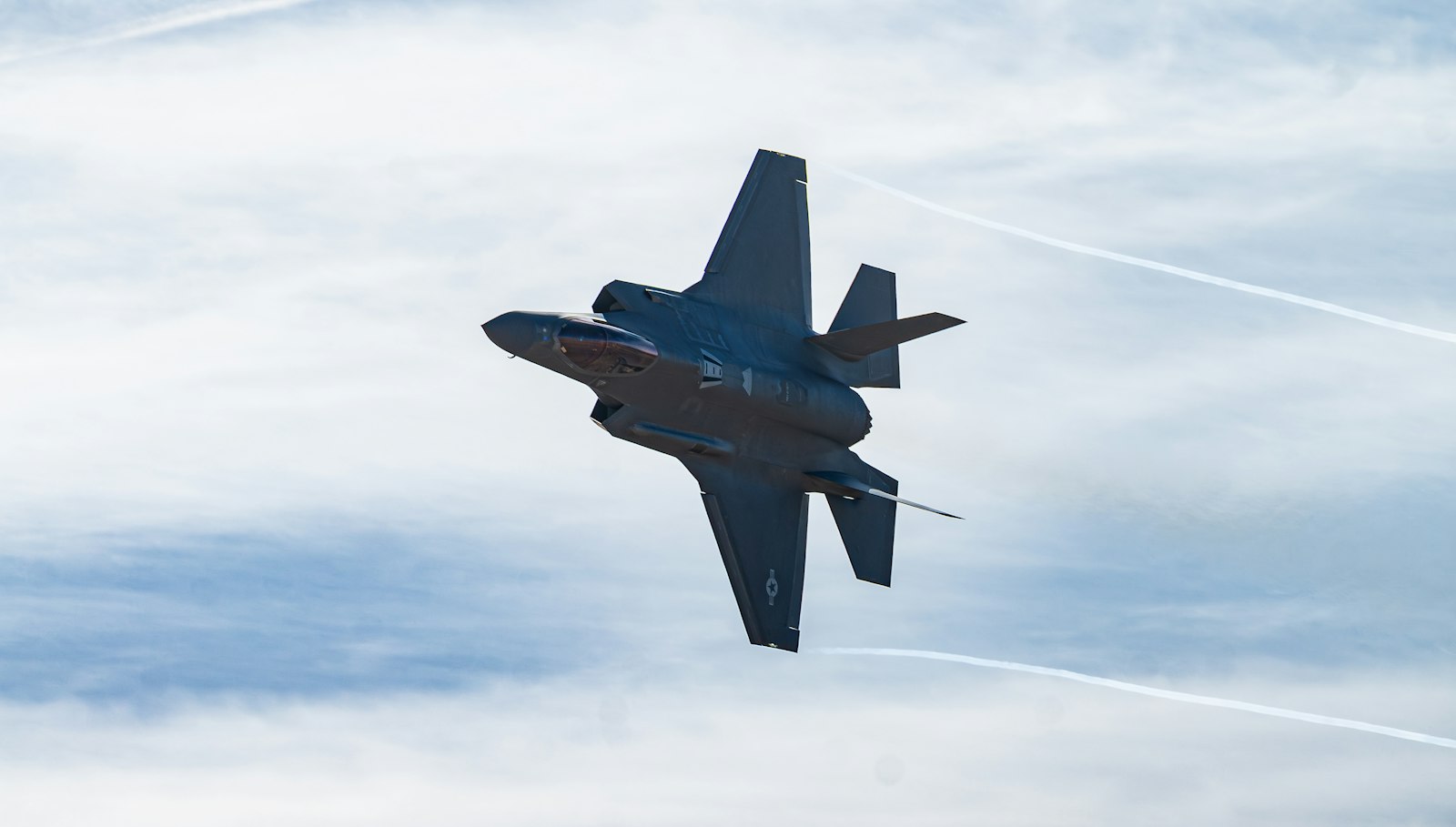
USS Nimitz made a final deployment after passing its official 50-year service life. The Navy first planned to retire it in May 2026, which would have dropped the fleet to 10 carriers for almost a year. In March 2026 it extended the ship to March 2027 instead, to hold at 11 until the Kennedy is delivered. Nimitz left Naval Base Kitsap in Washington that month for Norfolk and will later be defueled at Newport News. The Kennedy is slated to take its place at Kitsap, and in October 2026 the unfinished ship took its first F-35C landing, Lockheed Martin says.
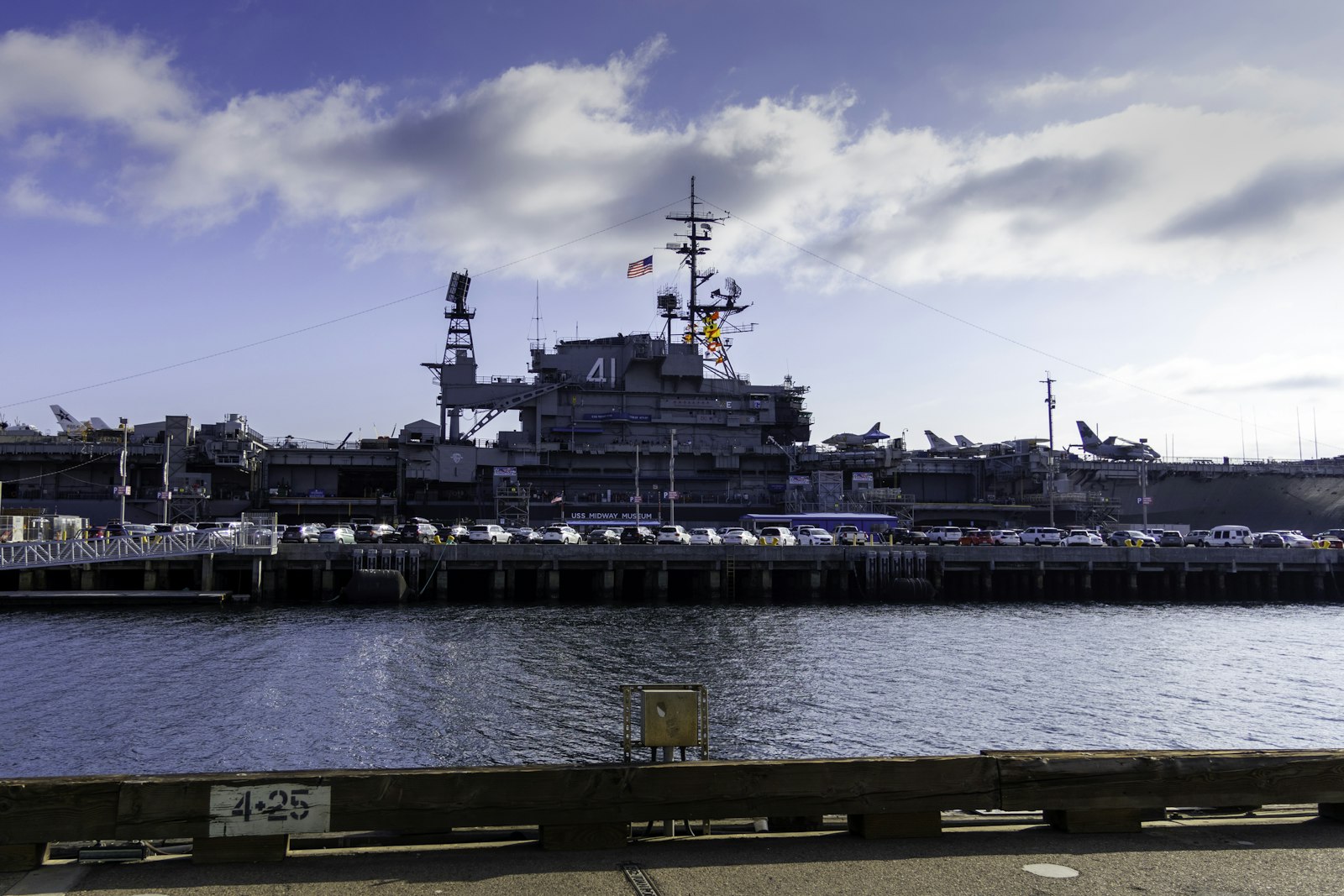
Over the longer run the Navy says it wants 12 carriers, but its 30-year shipbuilding plan projects 11 most years through 2036 and nine in the late 2040s and early 2050s. For the history of why carriers matter so much to the Navy, the 1942 fight at Midway is the place to start; see the U.S. Navy hub for more.
Sources
- Congressional Research Service: Navy Ford (CVN-78) Class Aircraft Carrier Program
- Congressional Research Service: Navy Ford class program (2022 version)
- Congressional Research Service: Navy Ford class program (2020 version)
- GAO: Navy faces challenges constructing the Gerald R. Ford within budget
- GAO: Ford-class carriers, lead ship testing and reliability shortfalls
- GAO: Ford-class follow-on ships need better cost estimates
- Federation of American Scientists: CVN-68 Nimitz class
- Huntington Ingalls Industries: Aircraft carriers
- The Maritime Executive: Pentagon testing office warns of unfixed flaws aboard USS Ford
- Defense Daily: DOT&E says Ford unlikely to meet sortie generation rate
- Navy Times: Gerald R. Ford returns home after 8-month deployment
- DVIDS: Gerald R. Ford Carrier Strike Group departs for deployment
- Navy Times: USS Gerald R. Ford arrives in Latin American waters
- Stars and Stripes: Ford strike group enters the Mediterranean
- Navy Times: Ford Carrier Strike Group receives Presidential Unit Citation
- Stars and Stripes: Naval Base Kitsap would swap oldest carrier for newest
- Breaking Defense: Nimitz gets service life extension until 2027
- Breaking Defense: Trump says he'll order steam for carrier catapults
- Lockheed Martin: F-35 Fast Facts