One fighter, three versions
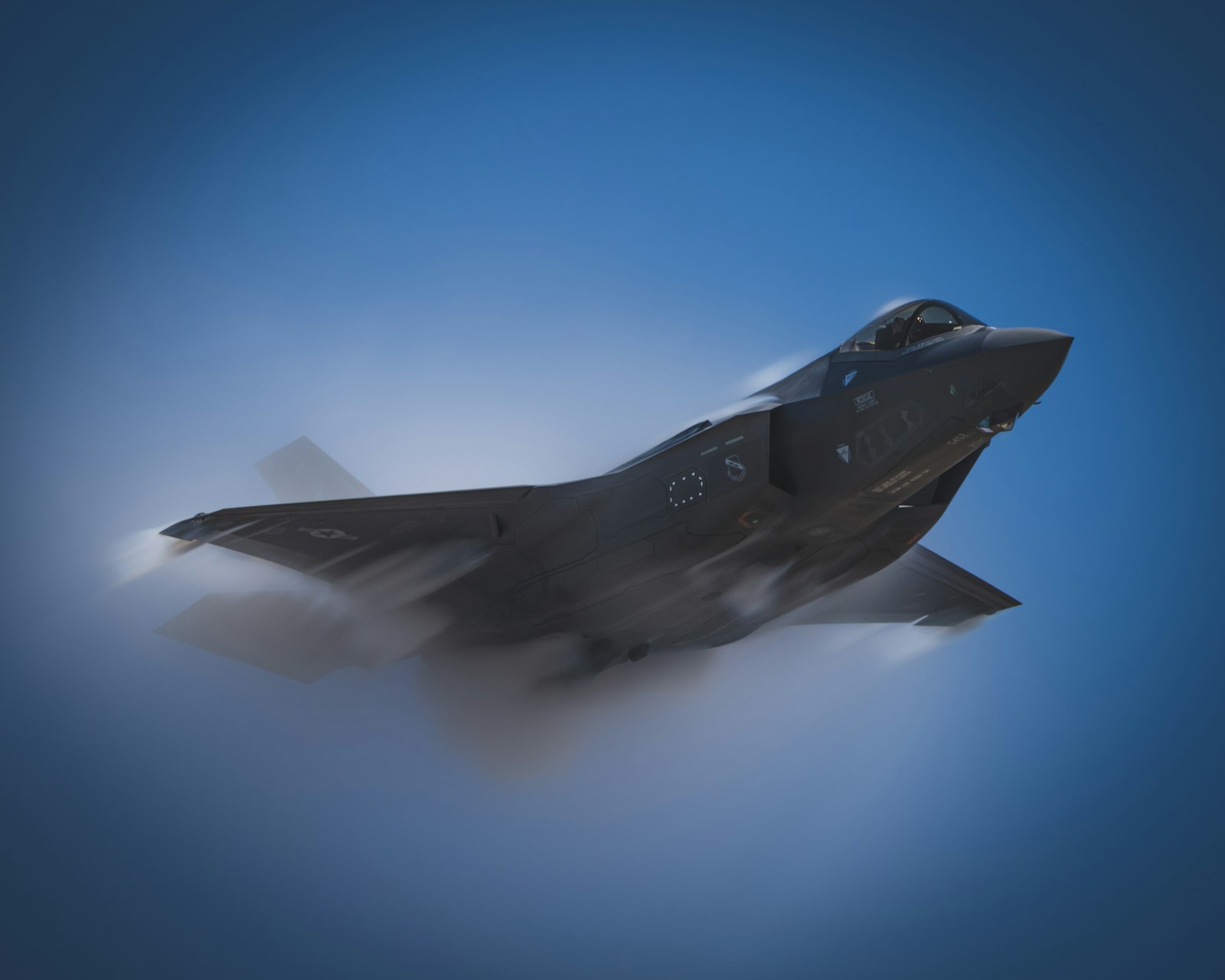
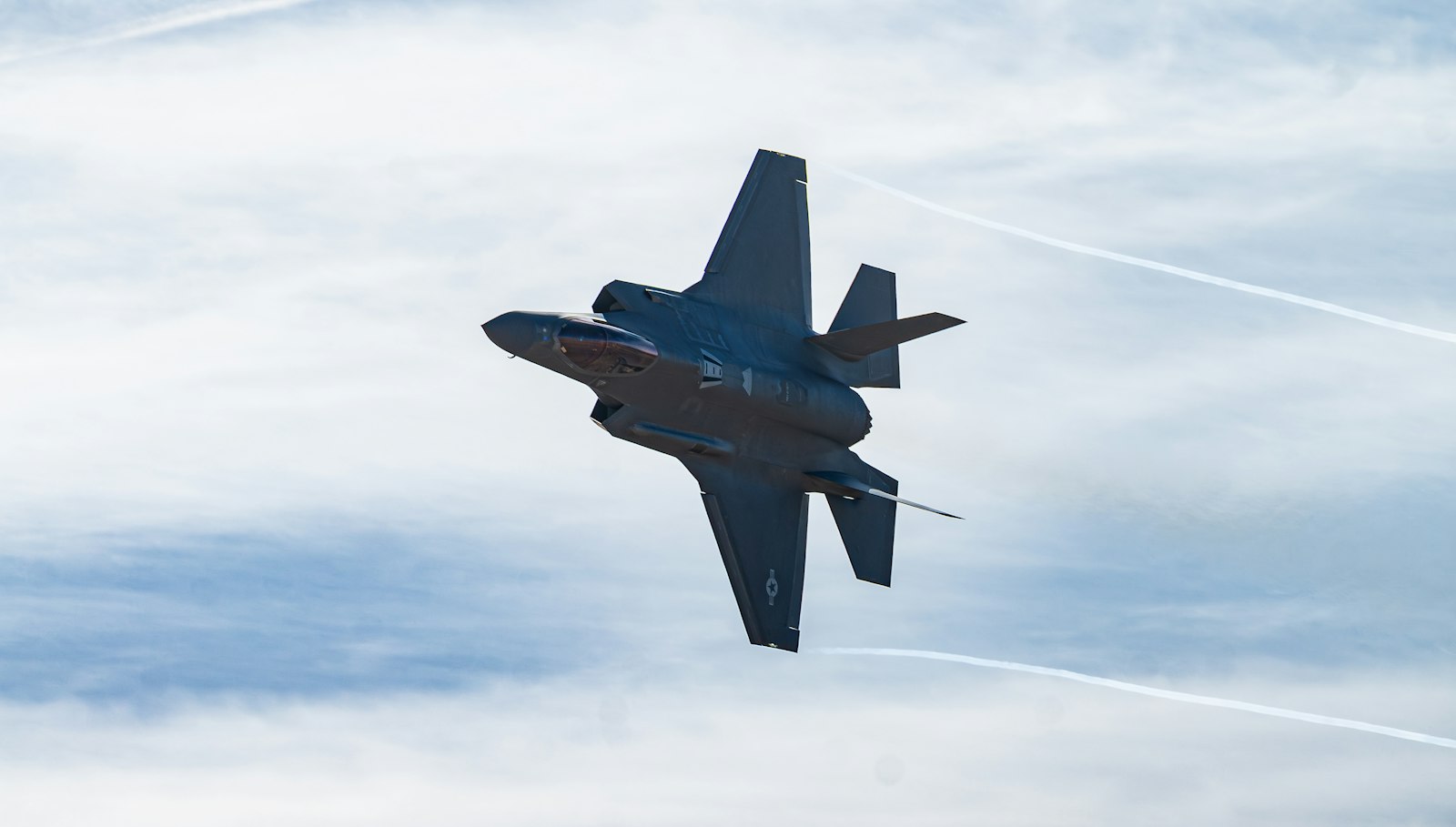
The Pentagon buys three versions of the F-35, and they share far more than they don't. In the words of a Congressional Research Service report, the differences come down to "the manner of takeoff and landing, fuel capacity, and carrier suitability." All three are stealthy, carry the same sensors and weapons, top out around Mach 1.6, and fly on the Pratt & Whitney F135, an engine developed from the F-22's F119 that makes more than 40,000 pounds of thrust.
The split by service is simple. The F-35A goes to the Air Force, the F-35B to the Marine Corps, and the F-35C to both the Navy and the Marines.
The three versions side by side
These are Lockheed Martin's published figures from its 2023 product cards, not independent test results.
| Figure | F-35A | F-35B | F-35C |
|---|---|---|---|
| Takeoff and landing | Conventional runway | Short takeoff, vertical landing | Carrier catapult and arresting hook |
| Length | 51.4 ft | 51.2 ft | 51.5 ft |
| Wingspan | 35 ft | 35 ft | 43 ft |
| Combat radius, internal fuel | More than 590 nm | More than 450 nm | More than 600 nm |
| Internal fuel | 18,250 lb | 13,100 lb | 19,200 lb |
| Weapons payload | 18,000 lb | 15,000 lb | 18,000 lb |
| Max g | 9.0 | 7.0 | 7.5 |
| 25mm gun | Internal | External pod | External pod |
F-35A: the Air Force's jet
The A is the conventional takeoff and landing model, and Lockheed says it's the most common variant, flown by most F-35 customers. The Air Force intends it to replace its F-16 fighters and A-10 attack planes. It's the only version with a built-in gun, the four-barrel GAU-22/A, which its maker General Dynamics rates at up to 3,300 shots a minute. The B and C carry the same gun in an external pod. Our U.S. Air Force hub covers the service flying the most of them.
F-35B: the jump jet
The B is the short takeoff and vertical landing version, built to replace the Marine Corps' AV-8B Harrier and its older F/A-18 Hornets. To hover, it uses a rear exhaust nozzle that swivels downward and a lift fan in the middle of the fuselage, driven by the engine, that blows air straight down. Rolls-Royce builds that lift system in Indianapolis. In vertical mode the engine is rated at 40,500 pounds of thrust.
That hardware costs space and weight. The B carries the least internal fuel of the three, has the shortest combat radius and is limited to 7 g. It was also the hardest to build. CRS says problems with the B caused "a three-year slowdown to the entire F-35 program and added $6.5 billion to its development." Lockheed's latest list shows five buyers for it: the U.S. Marines, Britain, Italy, Japan and Singapore. The Marines get their own coverage on our U.S. Marine Corps page.
F-35C: the carrier version
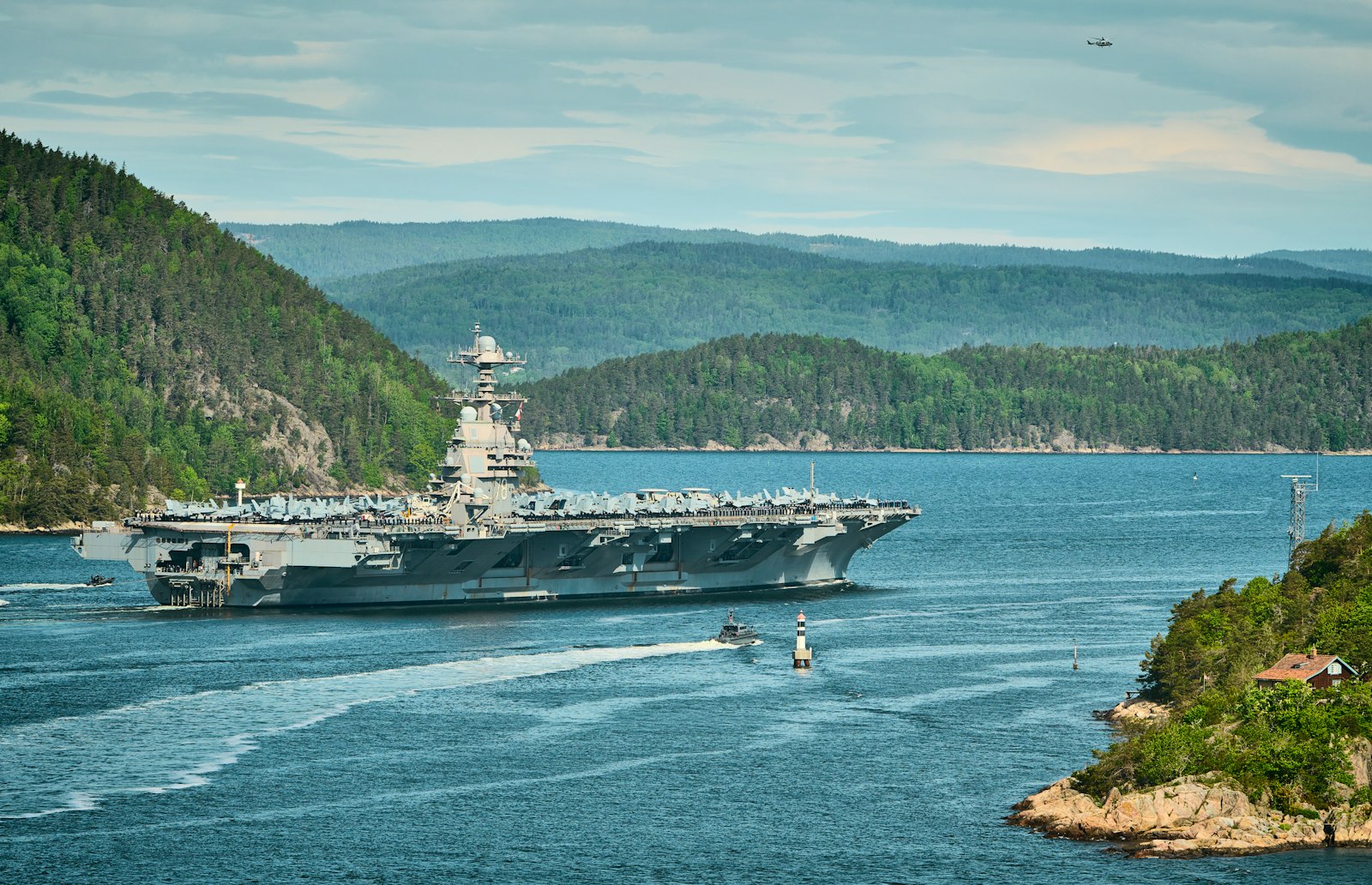
The C is built for catapult launches and arrested landings, with strengthened landing gear and airframe, a tailhook and wingtips that fold. Its wing is the biggest of the three, 668 square feet against 460 for the others, and it holds the most fuel. CRS notes it is "the Navy's first aircraft designed for stealth." Only the U.S. Navy and Marine Corps fly it. In October 2026, Lockheed says, an F-35C landed for the first time on the unfinished carrier John F. Kennedy, the second ship of the Ford class.
Next guide: Nimitz vs. Ford
The two classes of nuclear carrier the F-35C flies from, compared.
Who flies it
The U.S. program of record is 2,456 production jets plus 14 for testing. The Air Force plans 1,763 F-35As and the Navy 273 F-35Cs. The Marines' 420 jets are split two ways depending on whom you ask: CRS gave 353 Bs and 67 Cs, while Lockheed's November 2026 fact sheet shows 280 and 140.
Lockheed lists 20 program participants as of October 30, 2026. Britain is the only top tier partner, with Italy and the Netherlands next, followed by Australia, Denmark, Norway and Canada. Turkey was a partner until the United States removed it in 2019, after Ankara bought the Russian S-400 system. The rest buy through Foreign Military Sales: Israel, Japan, South Korea, Belgium, Poland, Singapore, Finland, Switzerland, Germany, the Czech Republic, Greece and Romania.
Deliveries passed 1,400 by Lockheed's count at the end of October 2026; Breaking Defense put the figure at over 1,300 a week earlier. Lockheed delivered a record 191 in 2025, many of them jets held back during the upgrade delay described below.
The services declared the jet ready in turn. The Marines went first, on July 31, 2015, with 10 F-35Bs of VMFA-121 at Yuma, Arizona. The Air Force followed on August 2, 2016, with the 34th Fighter Squadron at Hill Air Force Base, Utah. The Navy declared initial operating capability on February 28, 2019, after Strike Fighter Squadron 147 qualified aboard the carrier Carl Vinson. Israel, which calls its version the Adir, announced in May 2018 that it was the first country to use the F-35 in combat.
What it costs
The most recent production deal, for Lots 18 and 19, was finalized in September 2025 at $24.29 billion for 296 jets. Air & Space Forces Magazine worked out an average airframe cost of $82.4 million across all versions, not counting engines, which are bought separately. Lockheed hasn't released per-version prices for those lots. The Pentagon's 2023 estimate, in constant 2012 dollars with the engine included, put the A at $62.2 million, the B at $74.6 million and the C at $77.2 million. Those two sets of numbers measure different things, so don't compare them directly.
Keeping the fleet flying is the bigger bill. The Government Accountability Office reported in April 2024 that estimated sustainment costs had risen 44 percent, from $1.1 trillion in 2018 to $1.58 trillion in 2023, and that the Pentagon plans to spend over $2 trillion on the jet through 2088. It estimated the Air Force pays $6.6 million a year to operate and sustain each F-35A.
Late jets and readiness
The F-35's recent headlines have mostly been about an upgrade called Technology Refresh 3, a new core processor, cockpit display and memory that the next round of capabilities depends on. The Air Force stopped accepting new jets in July 2023 because of it, and deliveries didn't resume until July 2024. GAO found that the 110 jets Lockheed delivered in 2024 were late by an average of 238 days, and that the wider Block 4 upgrade was over $6 billion above estimates and at least five years behind. As of January 2026 the program office still hadn't declared the TR-3 jets combat capable.
Readiness has slid too. GAO reported in June 2026 that the share of the fleet able to fly at least one of its missions fell from 67 percent in fiscal 2021 to 44 percent in fiscal 2025, and the share able to fly all of them fell from 38 percent to 25. The Pentagon has a $13.7 billion plan to improve readiness by 2030.
Get the briefing
Fighter jets, carriers and the budgets behind them, in an occasional email.
Where the program goes from here
The Pentagon's fiscal 2026 request cut the F-35 buy from 74 jets to 47: 24 F-35As, 12 F-35Cs and 11 F-35Bs. The same budget put $3.5 billion into the Air Force's new F-47 fighter. Abroad, Switzerland said in March 2026 it would buy only about 30 jets to stay within its budget, and Canada had 16 on firm order with 72 more still under review as of late October 2026.
On October 22, 2026, the Pentagon and Lockheed reached a tentative 10-year framework covering at least 850 U.S. jets across 10 production lots, with Lockheed funding $7 billion in program initiatives. Congress still has to approve it. For a look at a stealth fighter claim that never got off the ground, see our piece on Iran's Qaher-313.
Sources
- Lockheed Martin: F-35 Lightning II Fast Facts
- Lockheed Martin: F-35A product card
- Lockheed Martin: F-35B product card
- Lockheed Martin: F-35C product card
- General Dynamics OTS: GAU-22/A 25mm Gatling gun
- Congressional Research Service: F-35 Lightning II, Background and Issues for Congress
- GAO: F-35 Sustainment, costs continue to rise
- GAO: F-35, actions needed to address late deliveries
- GAO: F-35 Sustainment, persistent readiness challenges
- Air & Space Forces: Only one in four F-35s fully mission capable
- Air & Space Forces: F-35 deal for Lots 18 and 19
- Breaking Defense: Record 191 F-35 deliveries in 2025
- Breaking Defense: Pentagon, Lockheed agree to decade-long F-35 framework deal
- DVIDS: U.S. Marine Corps declares F-35B operational
- Defense News: Air Force declares F-35A ready for combat
- Defense News: Navy F-35C reaches initial operating capability
- Air Force Times: The F-35 just made its combat debut
- Air & Space Forces: How the 2026 budget shapes the fighter fleet
- Breaking Defense: FY2026 procurement budget roundup
- Swissinfo: Swiss reduce F-35 order to 30
- Breaking Defense: Canadian firms line up for potential GCAP, Gripen work