The short answer
This page used to lean on Business Insider's 2018 ranking of military power, which put China third. Japan's place on that list, as the old page summed it up: It is the 7th most powerful military force in the world. Read both placings as a snapshot of 2018. The figures underneath have shifted a long way since then, so this version works from current budgets, headcounts and fleet numbers instead.
No public source can score a war that hasn't been fought. What the numbers do show is a lopsided matchup on paper, with China ahead on money, people and ships, and an alliance that changes the arithmetic, because Washington has committed in writing to Japan's defense.
| Measure | China | Japan |
|---|---|---|
| Active personnel (IISS, Military Balance 2026) | 2,035,000 | 247,000 |
| 2026 defense budget | 1.91 trillion yuan, about $277 billion | 9.04 trillion yen, about $58 billion |
| Aircraft carriers | 3 (Liaoning, Shandong, Fujian) | Two Izumo-class ships being modified for F-35B jets |
| Nuclear warheads | Low 600s, Pentagon estimate | None |
Money: a five-to-one gap
Beijing announced its 2026 defense budget on March 5 at the opening of the National People's Congress: 1.91 trillion yuan, roughly $277 billion, a 7 percent rise. It had grown 7.2 percent in each of the three years before that. By Defense News's math, China now outspends Japan nearly five to one.
The Pentagon thinks even that figure runs low. Its December 2025 report to Congress said China's published budget "does not contain the totality of China's defense spending," because it leaves out items such as military research, some capital spending and internal security. The same report put the real 2024 total at somewhere between 32 and 63 percent above what Beijing announced.
Japan's number is a record too, just a far smaller one. Prime Minister Sanae Takaichi's cabinet approved 9.04 trillion yen, about $58 billion, for fiscal 2026 on December 26, 2025. That's 3.8 percent more than the year before and the 12th record in a row. It sits inside a plan Tokyo adopted in December 2022 to spend about 43 trillion yen over five years and reach roughly 2 percent of GDP. The original deadline was fiscal 2027. In her first policy speech, in October 2025, Takaichi said Japan would get there in the fiscal year ending March 2026 instead.
Troops: two million against a quarter million
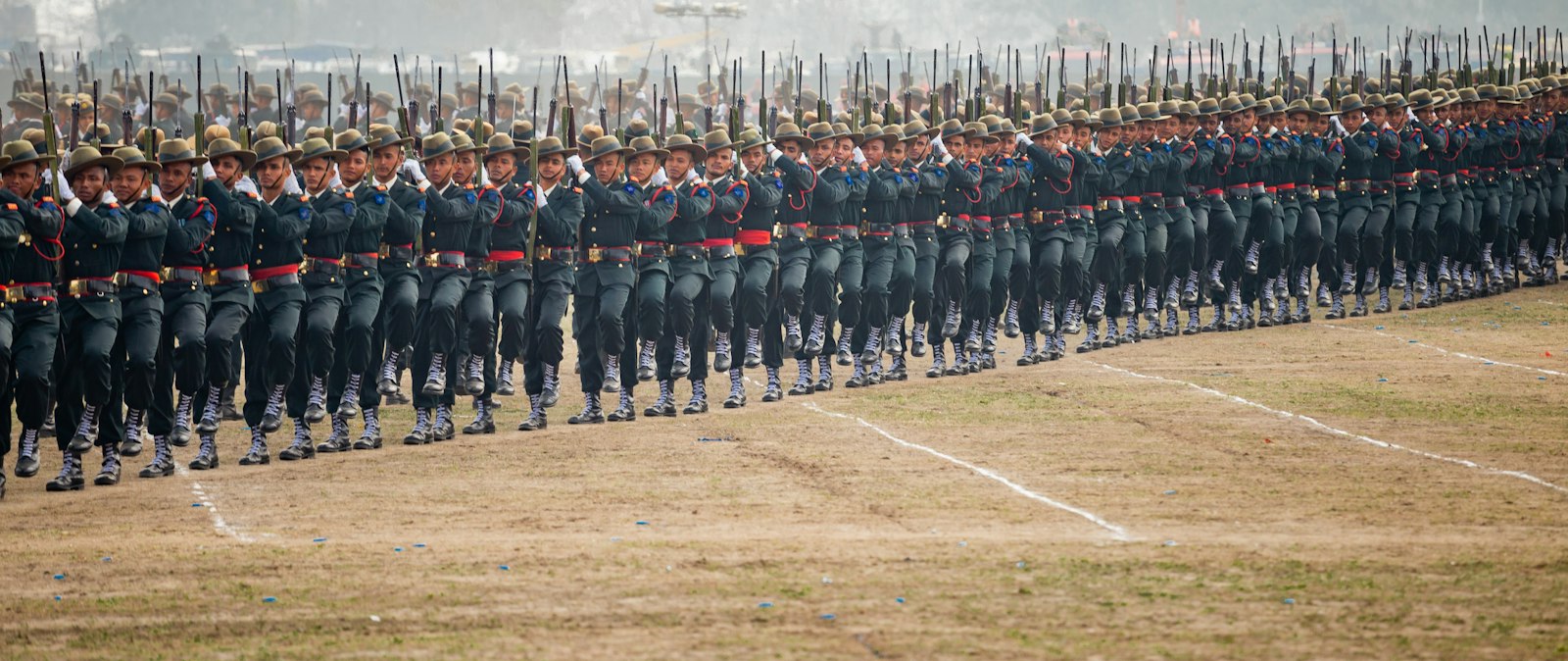
The IISS publishes an annual count of the world's armed forces called The Military Balance. Its 2026 edition credits China with about 2,035,000 active personnel, more than any other country. Japan's Self-Defense Forces come in at 247,000, which ranks 22nd in Business Insider's table of those figures. Our guide to the world's largest armed forces lays out the whole list.
Japan's real strength runs below its ceiling. Defense Ministry figures compiled by Nippon.com show 227,843 people in uniform in March 2023 against 247,754 authorized slots, about 92 percent. Recruiting is the sore spot. In fiscal 2023 the forces signed 9,959 recruits against a goal of 19,598, a record low of 51 percent. For the lowest enlisted ranks the fill rate was about 30 percent.
China's trouble, by outside accounts, sits at the top. Researchers at CSIS count 101 senior PLA leaders purged since 2022. When Xi Jinping took over the Central Military Commission in 2012 it had eleven members; at this year's congress only Xi and one vice chairman, Zhang Shengmin, sat at the top table.
Next guide: who fields the most troops
The 25 biggest militaries by active strength, from China down to Iraq.
At sea: carriers, destroyers and submarines
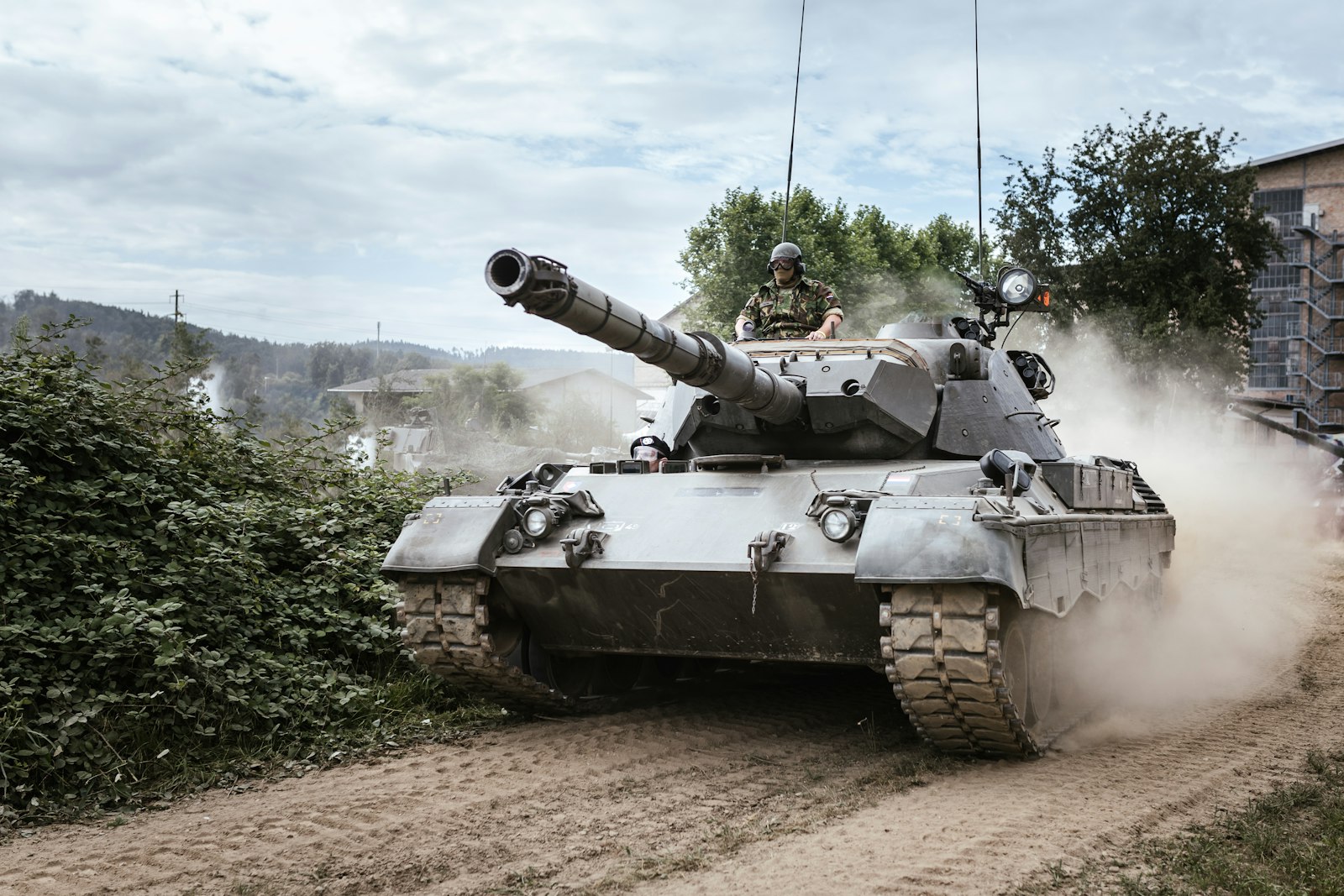
Any fight between these two would be decided over water, so the fleets matter most. China commissioned its third aircraft carrier, the Fujian, at a base on Hainan island in November 2025 with Xi in attendance. The first two, the Soviet-built Liaoning and the Shandong, launch jets off a ski ramp. The Fujian is the first carrier China designed and built entirely on its own, and it uses an electromagnetic catapult like the one on America's newest Ford-class carriers. Defense News describes China's fleet as the world's largest navy, though it still has fewer cruisers, destroyers and nuclear submarines than the U.S. Navy, which runs 11 carriers to China's three.
Japan is taking a different route. It's modifying its two Izumo-class ships, the Izumo and the Kaga, to operate the short-takeoff F-35B, a program costed at about $687 million in total. It already has eight Aegis destroyers and is adding two Aegis-equipped ships, each 190 meters long and 12,000 tons, with the first due in fiscal 2027. The 2026 budget also pays for a tenth Taigei-class submarine at about $773 million and a new, upgraded Mogami-class frigate.
Missiles and the nuclear gap
The widest gap is nuclear. The Pentagon's December 2025 China report put Beijing's operational stockpile in the low 600s and said it remains on track for 1,000 warheads by the end of the decade, Stars and Stripes reported. It also judged that China has likely loaded more than 100 intercontinental ballistic missiles into desert silos.
Japan has no nuclear weapons. It relies on the United States, which pledged in a February 2025 joint statement to defend Japan "using its full range of capabilities, including nuclear capabilities." The U.S. stockpile stands at around 3,700 warheads.
What Japan is building is conventional reach. Its 2022 strategy approved weapons that could "enable Japan to mount effective counterstrikes" on enemy territory, ending a policy that dated to 1956, and named American Tomahawk cruise missiles among the purchases. The 2026 budget adds a longer-range version of Japan's own Type 12 anti-ship missile, a submarine-launched cruise missile and Tomahawk launch gear for two destroyers, the Myoko and the Atago. It also puts about $640 million into SHIELD, a coastal defense network built around drones and unmanned boats.
Allies: why Japan doesn't stand alone
Leave the United States out and the comparison is misleading. When the American and Japanese leaders met in February 2025, their joint statement said "Article V of the U.S.-Japan Treaty of Mutual Cooperation and Security applies to the Senkaku Islands" and restated Washington's "unwavering commitment to the defense of Japan."
American forces are also on the ground. The Marine Corps' 12th Marine Littoral Regiment on Okinawa was scheduled to start fielding NMESIS, a truck-mounted launcher for the Norwegian Naval Strike Missile, in March 2026, according to Marine Corps Times. The same missile sits at the heart of Germany's missile deal with Norway.
Get the briefing
We will email you when another foreign force comparison goes up.
Where the tension runs highest
Taiwan is at the center of it. Defense News counted a record 5,709 Chinese military aircraft sorties in the Taiwan Strait and inside Taiwan's air defense identification zone in 2025. In November that year Takaichi told Japan's parliament that a Chinese use of force against Taiwan would be a "survival-threatening situation" for Japan, according to Japanese media cited by Al Jazeera. Her predecessors had avoided saying so in public. One analyst quoted by the network put it simply: prime ministers "just don't say it."
Beijing's reaction went all the way to the United Nations. China's ambassador called the remarks "erroneous" and wrote to Secretary-General António Guterres, and Japan's envoy answered that China's claims were "categorically unacceptable." Around the same time, as the Fujian entered service, Japan's chief cabinet secretary, Minoru Kihara, said China was "extensively and rapidly strengthening its military power without transparency."
So who would win?
Count hardware and China comes out ahead nearly everywhere: budget, troops, carriers, missiles and warheads. Japan's force is smaller and short of recruits, but it keeps setting spending records and it fights alongside the world's most capable military, with American Marines already stationed on its southern islands. A war between Beijing and Tokyo would almost certainly not stay a two-country war, and that's the reason this page doesn't pick a winner.
Sources
- Defense News: China amps up its 2026 defense budget by 7% amid purge of generals
- Naval News: Japan approves record defense budget for fiscal year 2026
- Defense News: New Japanese strategy to up defense spending, counterstrike purchases
- Korea Times: New Japan PM pledges early increase to defense spending
- Business Insider: The 25 largest militaries in the world, ranked by active troops (IISS Military Balance 2026 data)
- Nippon.com: Self-Defense Force recruitment falls far short of 2023 target
- Defense News: Beijing commissions third aircraft carrier, first one made in China
- Stars and Stripes: Pentagon report on China's nuclear warhead growth
- The White House: United States-Japan Joint Leaders' Statement
- Al Jazeera: Japan, China continue to spar at UN over Takaichi remarks on Taiwan
- Marine Corps Times: This unit will be the next to field the Corps' ship-killing missile