


A service born in 2019
The Space Force came into being on Dec. 20, 2019, under the fiscal 2020 National Defense Authorization Act. It was built from 23 Air Force units and placed under the Air Force's military department, much as the Marine Corps sits inside the Department of the Navy. The two services share a civilian secretary, but each has its own uniformed chief.
Gen. John W. "Jay" Raymond was the first Chief of Space Operations, followed by Gen. B. Chance Saltzman in 2022. In August 2026 the Senate confirmed Lt. Gen. Douglas Schiess to replace Saltzman. Members are called Guardians, and the motto is Semper Supra, "Always Above."
What it does
The law gives the Space Force a short mission: to "provide freedom of operation for the United States in, from, and to space." The Congressional Research Service breaks that into three jobs. In space, it means space control. From space, it means satellite communications, positioning, navigation and timing, and missile warning. To space, it means assured access through launch. Intelligence, cyber operations, command and control and space domain awareness run across all three.
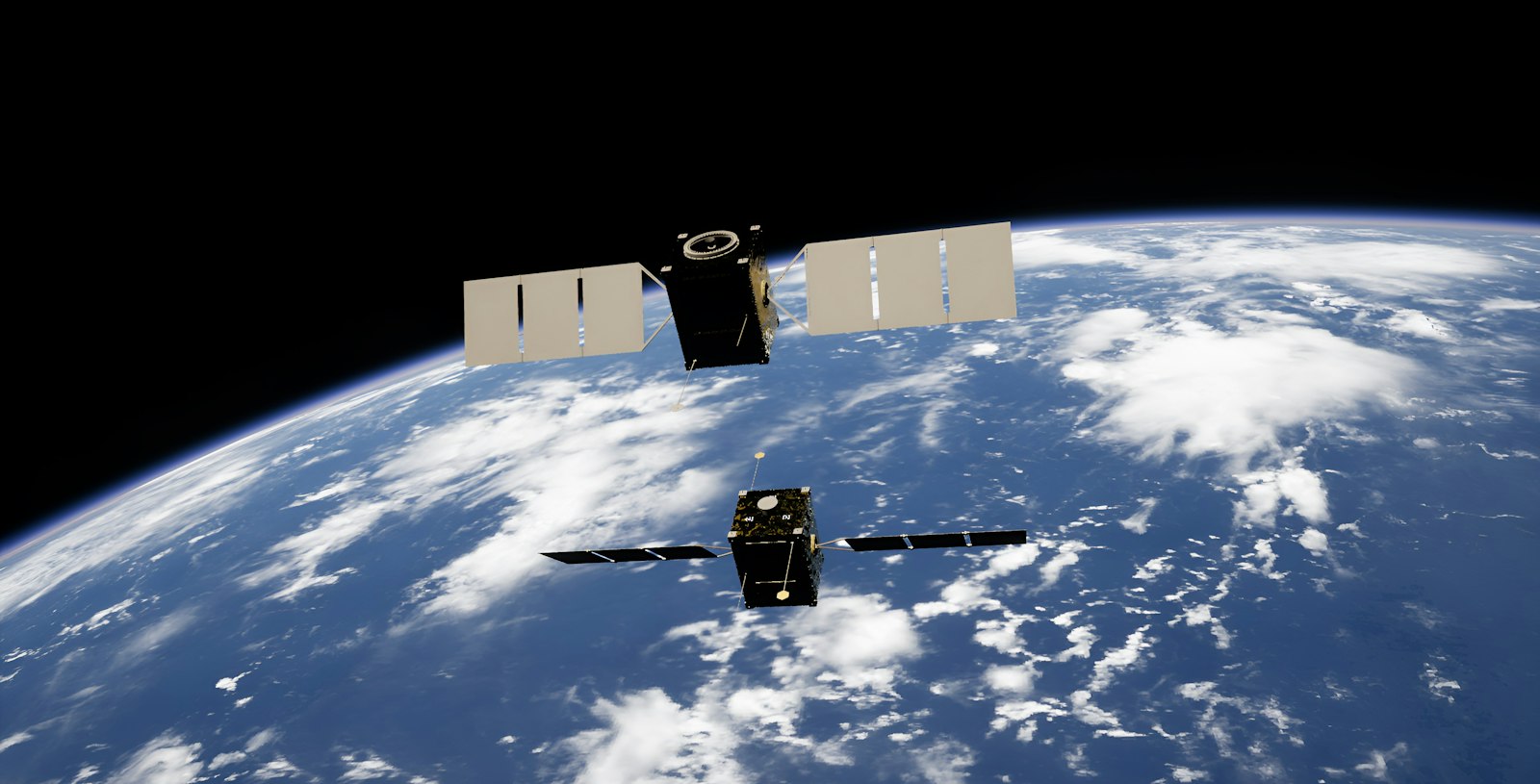
In practice the Space Force operates the GPS constellation and the missile detection networks, and it watches for threats to the more than 7,500 active satellites in orbit, over two thirds of them run by U.S. owners, according to the Council on Foreign Relations. It isn't the same thing as U.S. Space Command, a joint combatant command that was reactivated in 2019 and works closely with the service.
How big it is
It's by far the smallest of the six services. A Space Force spokesperson told Breaking Defense in April 2026 that it had 15,094 Guardians, military and civilian, and 10,198 of them were in uniform. Congress raised the authorized military end strength from 9,800 in 2025 to 10,400 for 2026, and the Pentagon wants 13,200 in fiscal 2027. The service's Objective Force plan, released in April 2026, calls for doubling end strength over the next 10 years.
The budget is climbing faster still. CRS put the fiscal 2027 request at $71.3 billion, 123 percent more than the $31.9 billion enacted for fiscal 2026, with 65 percent of the discretionary part going to research, development, test and evaluation. More than half of all Guardians work in Colorado, The Gazette reported.
Next guide: the ASVAB
Space Force jobs lean technical, so your line scores matter. Here's how the test works.
How it's organized
The Space Force has three levels of command. Field commands, each led by a two or three-star general, sit at the top. Deltas, led by colonels, come next, and squadrons led by lieutenant colonels or majors do the daily work. The three field commands are:
- Combat Forces Command, formerly Space Operations Command, at Peterson Space Force Base, Colo.
- Space Training and Readiness Command, or STARCOM, at Patrick Space Force Base, Fla.
- Space Systems Command at Los Angeles Air Force Base, Calif.
Space Force headquarters and the Office of the Chief of Space Operations are at the Pentagon.
Becoming a Guardian
Enlisted Guardians go to basic training at Lackland in San Antonio, the same base the Air Force uses. The service sent its first recruits to initial training in October 2020, and in 2022 it announced guardians-only classes taught by a cadre made up entirely of Space Force instructors. Before you apply, read up on the ASVAB and the enlistment age and education requirements; our basic training comparison covers what comes after you ship.
Sources
- Council on Foreign Relations: Happy sixth birthday, U.S. Space Force
- Congressional Research Service: U.S. Space Force primer (IF12610)
- Breaking Defense: Space Force plans for 2040 call for thousands more Guardians
- The Gazette: Space Force sees budget, manpower boost as it marks year six
- Stars and Stripes: Space Force to start its own basic training for guardians