

Who the Coast Guard answers to
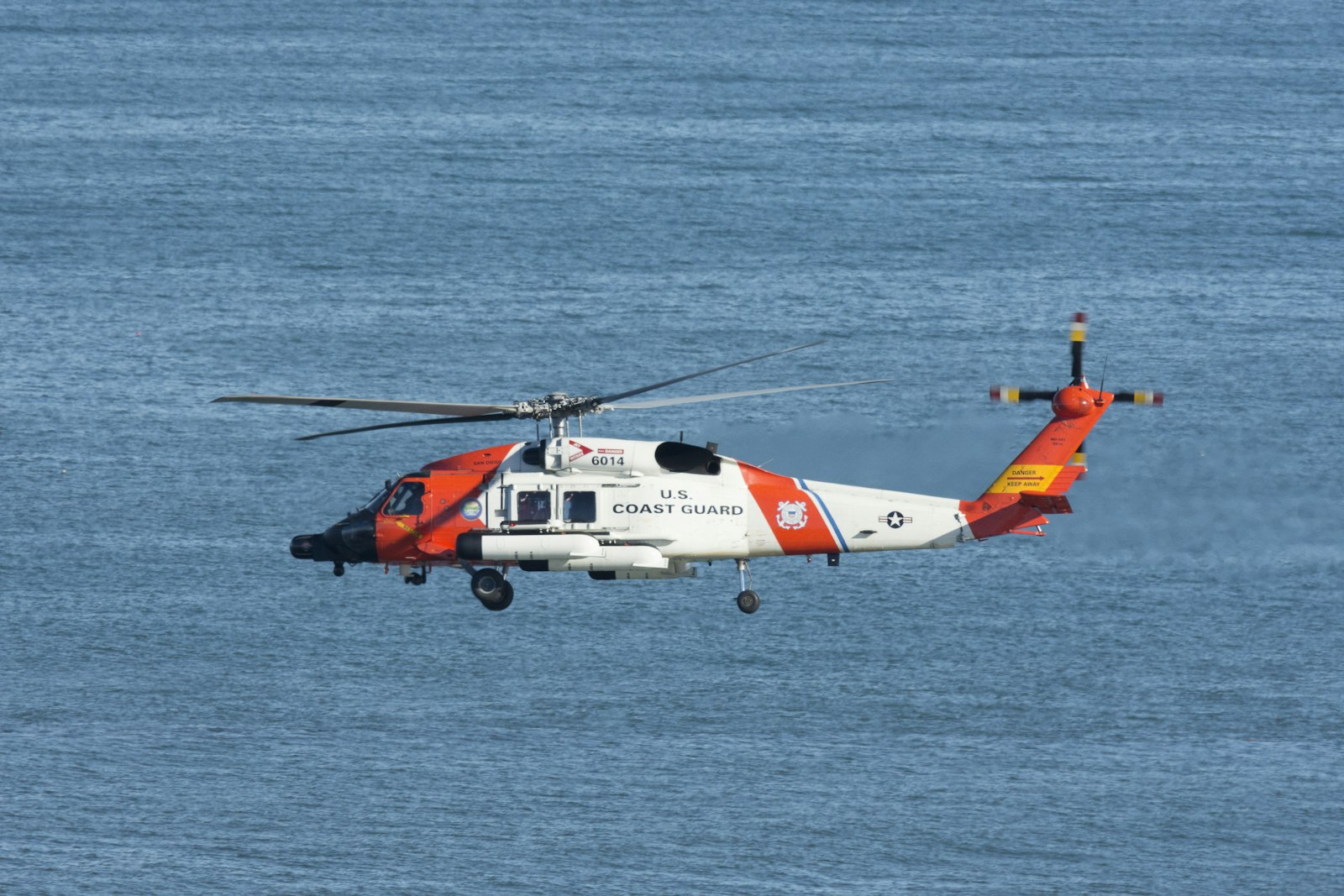
By law the Coast Guard is "a military service and a branch of the armed forces of the United States at all times." Day to day, though, it belongs to the Department of Homeland Security, not the Pentagon. Its money comes mainly through the annual Homeland Security appropriations act, and its commandant isn't one of the Joint Chiefs.
That can change. Under 14 U.S.C. 103, the Coast Guard starts operating as part of the Navy when Congress declares war and directs the move in the declaration, or whenever the President orders it. It then takes orders from the Secretary of the Navy until the President hands it back by executive order. The last time that happened was World War II.
The peacetime arrangement suits a service that doubles as a law enforcement agency. The Coast Guard is exempt from the Posse Comitatus Act, which limits the use of the military for policing, and on a typical day it boards 144 vessels, the Council on Foreign Relations reported in 2021.
From revenue cutters to Coast Guard
The service traces itself to Aug. 4, 1790, when Congress authorized Treasury Secretary Alexander Hamilton to build ten revenue cutters to stop smuggling and enforce tariff laws. For more than a century it went by the Revenue Marine, then the Revenue Cutter Service. In 1915 Congress merged it with the U.S. Life-Saving Service and renamed it the Coast Guard. The Lighthouse Service came under it in 1939, and the Bureau of Marine Inspection and Navigation followed in 1946.
Size and missions
The Coast Guard had 40,590 active-duty members, CFR wrote in December 2025, which makes it the second smallest service after the Space Force. CFR's 2021 count added more than 8,000 reservists and some 30,000 civilian auxiliary volunteers. The service's Force Design 2028 plan aims to add 15,000 people to a current 76,000 members, Stars and Stripes reported, without spelling out who that larger figure covers.
The law gives the Coast Guard 11 statutory missions. Its newest cutters are designed to handle seven of them routinely: search and rescue, drug interdiction, migrant interdiction, ports and waterways security, protecting living marine resources, general law enforcement and defense readiness. In a typical year the service answers about 20,000 search and rescue cases and saves more than 3,500 lives, according to CFR's 2021 figures. In fiscal 2025 it seized 510,000 pounds of cocaine, more than three times its long-term annual average, gCaptain reported.
The cutter fleet
Three shipbuilding programs are replacing about 90 older cutters, the Congressional Research Service says:
- National Security Cutters, 418 feet long, replace the 12 Hamilton-class high endurance cutters. Congress funded 11. The 10th entered service in April 2024, and the 11th was reportedly canceled in June 2025.
- Offshore Patrol Cutters, 360 feet long, will replace 29 medium endurance cutters. None had entered service as of January 2026.
- Fast Response Cutters replace 49 Island-class patrol boats. A September 2025 award brought the planned total to 77, and 59 were in service as of August 2025.
For the Arctic, the service plans up to 11 medium-size Arctic Security Cutters built with Finnish and Canadian shipyards, with the first expected as early as 2028.
Next guide: who is eligible to enlist
Coast Guard and Defense Department limits on age and schooling, side by side.
Force Design 2028 and joining
Force Design 2028, launched in 2025 after an internal review, rests on four pillars: people, organization, technology and acquisition. It has already eliminated at least a dozen admiral positions. Recruiting has kept pace. The Coast Guard brought in 5,445 active-duty enlisted members in fiscal 2026, up from 5,204 in 2025 and 4,422 in 2024, and commissioned 346 active-duty officers.
Enlisted recruits go through basic training at Training Center Cape May, N.J. The service has spent $400 million upgrading its training centers at Cape May and Yorktown, Va. Our guides to basic training and height and weight standards compare the Coast Guard with the Defense Department services.
Sources
- U.S. Code: 14 U.S.C. 103, Department in which the Coast Guard operates
- Congressional Research Service: Defense Primer: Department of the Navy (IF10484)
- Council on Foreign Relations: Happy 231st birthday, United States Coast Guard
- Council on Foreign Relations: Happy sixth birthday, U.S. Space Force
- Congressional Research Service: Coast Guard Cutter Procurement (R42567)
- Stars and Stripes: Coast Guard recruiting surpasses goal
- gCaptain: US Coast Guard updates Force Design 2028 overhaul